Monday, November 19, 2018

Sunday, May 13, 2018

The Future of Work - The Gig Economy is Here to Stay

The Gig economy is the term on the tip of the tongues of commentators and analysts these days. It’s a very broad term that describes both the increasing tendency of employers to hire independent contractors and short term workers rather than add new full time employees, and their accompanying taxes and benefits, to their workforce. It also describes a range of individuals who, by choice or necessity, build an income around work that is self-directed and without both the benefits and the downsides of a traditional job. A gig job may be a sole source of  income or performed in addition to a traditional job that doesn’t generate the income necessary to either the needs or the financial aspirations of the person involved.

The Gig Economy may seem to be a new phenomenon to many, but to folks who live in the shadow of Rattlesnake Ridge it’s been a way of life for a long time. When my friend Micky Lewis, whom you’ve met in this column before, delivers wood to my home in the middle of the winter, between snow plowing gigs, he’s supplementing work as a contractor that comes and goes with the vagaries of the economy and the real estate market among other variables. Now this is the life that Micky has chosen, but for many such work comes as a necessity. The trade off that many of us made to live here is that well paying jobs tend to be less available here.

So now the phenomenon has spread throughout the economy and we have a name for it, possibly named from the well known phrase “I’ve got a side gig doing . . .you finish the sentence”.  

The Gig Economy is not well defined. In fact, to date, no formal definition has been established even for the terms “Gig Economy” or “Gig Worker”. Furthermore, statistical information that really measures the number of people engaged in the gig economy is nowhere near the level of sophistication as those who are employed in the full time labor market. The Bureau of Labor Statistics has stubbornly clung to measuring three things: “Farm employment, non-farm employment and employers, there just aren’t that many gradations for job categories beyond that except by industry” according to the most comprehensive research on gig jobs I have found at Nation1099.com (see below).  

There are some understandable reasons for this. After all we are trying to measure not only those who make their entire living putting together gigs, both online and offline, as well as the people who have a job but supplement it with gig jobs; and those who label themselves consultants. In an effort to attempt to get a handle on this part of our economy the GAO issued a report in 2014 and could not decide whether the portion of workers that BLS defined as “Contingent Workers” represented 5% or 40% of the workforce.  It is estimated that as much as 90% of the jobs added since 2015, encompassing all three of these, have been gig jobs. 47% of Millenials, who make up the largest portion of the workforce, according to surveys are engaged in some level of freelance work.

A few other instructive bits of data are worth considering:

  1. According to Forbes Magazine, since 2000, 1099s have gone up 22%, while the traditional W-2 forms have stagnated.
  2. Some researchers project that half of the working U.S. population will move into the gig economy within the next five years.


Among the trends nationally that will have the greatest impact on the number of people in the Gig economy is the alignment of small business growth and Gig Economy growth. These days when most people think of the Gig Economy they think of big companies like Uber, Lyft, AirBNB, etc. but one of the fastest growing area of Gig Job growth is new and expanding small businesses who find it easier and more affordable to hire freelance workers than to add individuals to their payroll. This is partly due to costs but it is also caused by a new trend in business with jobs being broken down into component parts with the work divided between technological solutions (robots, software, etc.) and freelance workers for specific tasks that cannot yet be solved employing technological solutions.   

All of the trend lines indicate that the Gig Economy is here to stay. It will bring massive change, massive opportunity and massive disruption to the economy and our lives, making it both exciting and dangerous, particularly when combined with another trend in business, exchanging technology for labor. Most economists, futurists and other prognosticators predict that by 2020 almost half of the entire labor force in the US will be employed within the Gig Economy. That’s the same year, by the way that many say we will begin to see massive disruption in the largest source of individual employment, drivers as driverless trucks and automobiles begin the process of what very well may become a driverless society by 2050.

Now, the good news and the bad news. First, most people who are employed in some way in the gig economy indicate a high degree of satisfaction. Varying polls show a satisfaction rate of as much as 75%. They enjoy the flexibility and the freedom that it provides for them.

The bad news is that almost all of the people employed in the Gig Economy are within the middle class strata of society. Very few of the working class and poor, whom I have referred to as the Precariat, are currently engaged in this sector of the economy. Where there is massive income disparity between the wealthy and everyone else already, this threatens to make the problem even worse.

Furthermore most jobs within the Gig Economy have no benefits and therefore fall outside of the social safety net that we have constructed since the Great Depression.

Meanwhile, Trump Tweets, the Republicans hide and the Democrats are gleefully looking to 2018 without a clue of what they will do - other than to hold impeachment hearings -  if they take over the control of the House and/or the Senate. Granted, the Democrats have no power within the government but they could be setting an example by telling us what they would do if they did. It may be that their relationship with labor - which in fairness was largely responsible for building the middle class in this country - has paralyzed them. Labor has already been through a dramatic decline in America and they are fighting to maintain their clout. The Gig economy represents an existential crisis for them.  Unless the labor movement comes up with some new approaches to organizing, their days are numbered.

Here’s the problem in a nutshell, while we have moved to Workforce 2.0 in the global economy our governance is still stuck in Democracy 1.0 and Capitalism 1.0 and that is a real and growing problem. If I were advising an insurgent Republican candidate or an Independent Candidate for President I’d tell him or her to adopt a radical centrist agenda that spoke to the greatest threats to American economic stability and democracy. Go BIG or Go Home as they say.  It would take a whole lot of guts and it would be a high risk strategy. It might also be the first real step toward righting the ship of state and saving both capitalism and democracy.


Links:
http://nation1099.com/gig-economy-data-freelancer-study
http://www.forbes.com/sites/gregoryferenstein/2015/12/12/the-gig-economy-appears-to-be-growing-heres-why/
https://smallbiztrends.com/2016/07/20-surprising-stats-freelance-economy.html


About Wayne D. King: Wayne King is an author, artist, activist and recovering politician. A three term State Senator, he was the 1994 Democratic nominee for Governor and most recently the CEO of MOP Environmental Solutions Inc., a public company in the environmental cleanup space.  His art is exhibited nationally in galleries and he has published three books of his images. His most recent novel "Sacred Trust" a vicarious, high voltage adventure to stop a private powerline, has been published on Amazon.com http://bit.ly/STPaper. He lives in Rumney at the base of Rattlesnake Ridge and proudly flies both the American and Iroquois Flags. His website is: http://bit.ly/WayneDKing

Saturday, May 12, 2018

Lessons from the March for Our Lives and the Scottish Parliament - Time to Give 16 and 17-Year-Olds the Right to Vote

Ruminations from an Unabashed Optimist, an Environmental Patriot and a Radical Centrist


Here in the shadow of Rattlesnake Ridge we’ve been treating 16 and 17-year-olds as adults for a long time. Rural life sometimes works that way. Especially now when changes in the world of work present such disruptive challenges to families and individuals.

Just up the road from us one particular family we know is one example. Dad walked out and left Mom and five kids to fend for themselves. He had done pretty well for himself and he could have helped his family but he chose not to and Mom could not afford the “luxury” of hiring an attorney to press her case. So the rule in this household was that if you were 16 or older, you worked and contributed to the cost of the mortgage, food and fuel. If you think this is an unusual circumstance, you need to get out more. A lot of families, especially those within the precariat, find this a necessary avenue to financial survival.

The truth is that we expect more and more of our young people once they reach the age of 16 and more and more of the legislation that winds its way through state and federal governments impacts their lives - when they have little power to affect it.

In my last "View from Rattlesnake Ridge" column ( http://bit.ly/RestoreCenter ) I suggested as an afterthought that we should lower the voting age to 16, but then I watched as a group of mostly 16 and 17-year-olds orchestrated the largest peaceful protest in American and World history with “The March for Our Lives” and now I want to put it right up front: It's time to give 16 & 17-year-old Americans the right to vote. Although a large number of politicians and “Adults” vied for the opportunity to address the crowd of more than 800,000 people on the Mall in Washington, the students who organized the march made it clear that this was going to be their moment, and it WAS. I stood and watched as these students demonstrated a sense of civic involvement far greater than most of their elders.

Life has changed and in an Age of Accelerations - a term coined by Thomas Friedman - we should, at a minimum, begin debating the merits of allowing 16 and 17-year-olds to vote. When a 16-year-old is accused of a violent crime they are, almost without exception, treated as an adult. We place no restrictions at all on the number of hours they may work. In most states they are allowed to marry - though from experience I wish they wouldn’t.

A wealth of research on the difference between the mental faculties of 16 and 17-year-olds and those of their “elders”, even the only-slightly older ones, provides evidence that the 16 and 17-year-olds are just as capable of making informed decisions as their 18-21-year-old peers. Even more interesting is that research shows that 16 and 17-year-olds are much more likely to participate in the democratic process than those between the ages of 18-25.

In 2011 Norway decided to test allowing 16 and 17-year-olds to vote. They found that participation (voting) among the 16 and 17 year-olds was closer to the average of adults 40-60 and well ahead of the numbers for those between the ages of 18 and 25. According to a University of Vienna study, a similar experiment in Austria yielded similar results. Both of these countries now allow 16 and 17 year-olds to vote.

Now there are probably a lot of reasons for this differential, not the least of which is that 18 to 25-year-olds are in the most turbulent time of their lives with changes coming at them at the speed of light, but the fact remains that where ever genuine social science has been done on this issue 16 and 17-year-olds come out on top.

According to Zachary Crockett, who has done some of the most compelling research for VOX, the reason that 16 is a preferable age for allowing young people to vote (my characterization - not his) is that 16 and 17 are better ages for forming civic habits than 18. 16 and 17-year-olds are in High School and most are living in homes that provide them with a reasonable level of security. According to Crockett: “Entrenched both in familial and institutional support groups, 16-year-olds are in a better place to form long-lasting voting habits than 18-year-olds — but only if the right to vote is accompanied by a robust civics education.”

This civics education can be delivered by schools - which is essential in my opinion - or by engagement with civically minded peers and adults - both of which were true of the students who are driving the the “March for Our Lives” and its outgrowth the “Never Again” movement. It is also what moved the Parliament of Scotland to UNANIMOUSLY vote to give 16 and 17 year-olds the right to vote after testing it with the recent vote on Independence.

The voting age nationally is 18 but the US constitution was crafted to (wisely) leave the age of voting to the states. Some states are experimenting with allowing younger voters to participate in caucuses and local elections. Perhaps the movement to allow 16 and 17 year-olds the right to vote will be driven by the states and not the lugubrious Federal Government that we have now. But that is a matter for another column . . . or several other ones.

For now, I for one am going to become an outspoken advocate for giving 16 and 17-year-olds the right to vote.

If you’d like to join in - or even to cast your vote for the other side, weigh in at #Let16Vote.


-------
#Precariat, #TheRadicalCentrist, #marchforourlives, #NeverAgain

About Wayne D. King: Wayne King is an author, artist, activist and recovering politician. A three term State Senator, he was the 1994 Democratic nominee for Governor and most recently the CEO of MOP Environmental Solutions Inc., a public company in the environmental cleanup space.  His art is exhibited nationally in galleries and he has published three books of his images. His most recent novel "Sacred Trust" a vicarious, high voltage adventure to stop a private powerline, has been published on Amazon.com http://bit.ly/STPaper. He lives in Rumney at the base of Rattlesnake Ridge and proudly flies both the American and Iroquois Flags. His website is: http://bit.ly/WayneDKing
Democracy 2.0

This week's View from Rattlesnake Ridge

Democracy 2.0

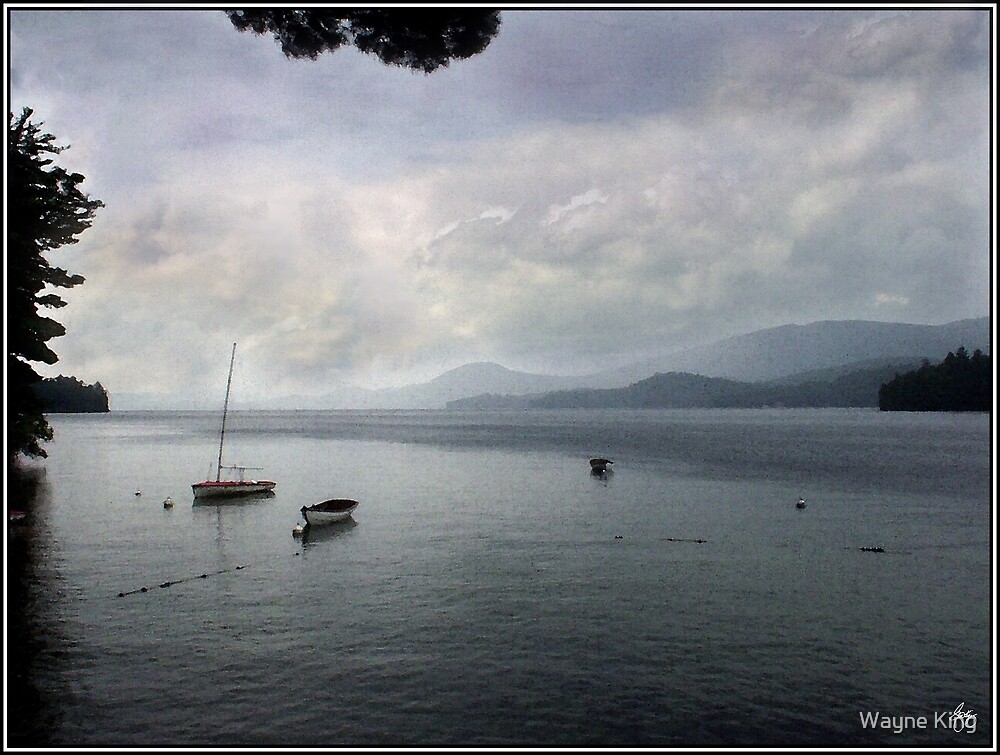
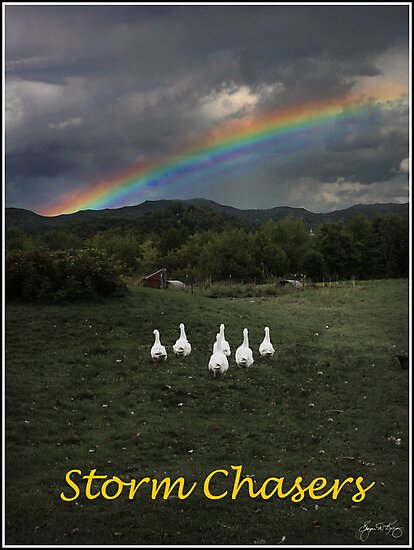
Storm Chasers

Wednesday, April 25, 2018

The Value of Native American Indian Investment in America

In the last few months I have been thinking a lot about the values and obligations that we Americans share with one another.

In December I wrote a column that asked the question of whether GDP (also called GNP or Gross National Product) was the best way to measure American success and happiness. (InDepthNH.org - http://bit.ly/2I38p1q );

In February, I wrote a column titled "Restoring the American Voice" (InDepthNH.org http://bit.ly/2Kfuvyn) advocating the need for us all to moderate our differences by remembering and respecting those values that we all share. . . Singing the American Song together as we find our way through the sea of changes ahead.

In my March 3, 2018 column "A National American Social Dividend and a New American Paradigm" (InDepthNH.org http://bit.ly/2r1HYRB ) I suggested that we recognize an American Social Dividend. Essentially making the case that beyond the inheritance of private wealth that we have long recognized in America, that there should be a recognition of an inheritance of public wealth. A recognition of those contributions made over the centuries to the nation's wealth by those who are not in the 1%., including both the collective personal investments made (willingly or unwillingly) and the collective investments created by laws and institutions that have provided the legal and economic framework for a successful economy and a robust democracy. Those investments have played a role in the long term success of the American economy and our way of life that is every bit as important as the Plutocrat, who is able to pass along to his or her children the wealth generated during their lifetime. In fact, it could be argued that, without the robust institutions of Democracy, Capitalism - which is more of an "Operating System" than it is an ideology - could not have produced the rewards it has produced for those Plutocrats.

Now don't get me wrong. . . I am a "Capitalist" and there is nothing , in my opinion wrong with being wealthy; frankly, I wish I were. The sooner we stop denigrating people for being wealthy, or poor, the faster we will rediscover our American Voice. But the myth of the "self-made man" is just that, a myth. Behind every self-made man is an education financed by taxpayers, or a patent protected by a law and perhaps financed through a government research grant; a government infrastructure and a physical infrastructure, paid for by taxpayers at every level; or, a government guaranteed loan for a business . . . do I need to go on?

In the Column I cite just some of the ways in which, over more than two centuries, we have padded the GNP at the expense of one group or another concluding, finally that "in some way or another we are all aggrieved, we are all due reparations; we are mutually responsible for our successes and our failures and mutually entitled to an American Social Dividend paid for with the blood, sweat and tears of every American. . ."

Naturally in thinking about all this I began to wonder if there were not a way to show that both the political and economic success of our nation is grounded in the contributions and sacrifices of all Americans, even those who have been marginalized historically.

So I began to construct a series of questions that I wanted to try answering to help me better explain all this and to defend the proposition.


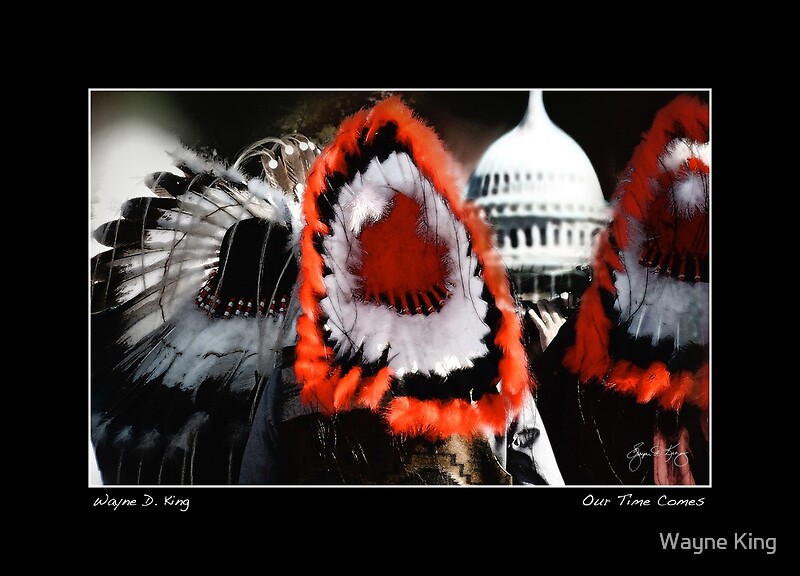
Our Time Comes


Here is the first question I asked myself (hey give me a break I'm Iroquois!) How does the value of the land taken from Native American people in the conquest of the US relate to GNP today?

As far as I know, no one has done extensive academic research on this topic and for good reason. It would be almost impossible - without Big Data and a powerful computer - to figure out, given differing land values and differing time tables, to say nothing of the fact that knowing when a land transaction was actually voluntary (not very often). On the other hand there is enough data out there to do a "back of the envelope" calculation generally, so here goes:

Using very rough estimates and not including the land taken from Native American people prior to 1776 and also not including improvements on the land such as the towns established in Georgia and the Carolinas by tribes like the Cherokee. It is generally understood that since 1776 Native Americans have been moved from lands totaling 1.5 Billion acres to a small set of reservations dotted around the country. If you simply use the general value of an acre of land prior to the Gold Rush ($1.25) the 1.5 Billion acres had a rough value back then of 1.9 Billion dollars. Using another rough calculation, real dollar values, we can estimate that $1.00 in the early 1800s is roughly (very roughly as we have no data related to inflation before 1913) equivalent to about $49.00 today. Since we know that no land in California today sells for $49.00 per acre (Average 2012 California farm real estate values set an all-time record - $7200 per acre) we can be sure that this is a conservative number, the value of the theft of native lands is, at a minimum $87 Billion dollars. If we use the $7,200/acre value, the value - still conservative - is 10.1 Trillion dollars. A glance at an estimate of the total value of US land is $14.48 Trillion dollars. The numbers show a surprising correlation. While about 80% of the lands of America were taken from native people after 1776, the value of that land today represents 70% of the total value of "unimproved" real estate (land only) in the US.

OK but the way we measure the wealth of our nation is not by real estate value, its by GDP. So how do we figure out what portion of the nation's wealth has been generated from lands taken from Native American people?

Well, let's try this: 18% of GDP is generated by real estate activity. 70% of 18% is 12.6%. GDP in 2016 was 18.57 Trillion. 12.6% of 18.57T is 2.32 Trillion dollars or 12.5% of 2016 US GDP generated from the 1.5 Billion acres of land taken from Native Americans since 1776.

While this is a seat of the pants calculation - I suspect the actual numbers would be higher - and certainly subject to legitimate criticism as there are many variables in the cost and value of land across the USA, the point made is the same. A large portion of national wealth has grown from the lands that we expropriated from Native American Indians.

Native people have not sought reparations. The loss of culture and marginalization for them has been far more important and can never be remunerated. It would be a step in the right direction to at least recognize that a substantial portion of our bounty today can be attributed to the land their ancestors called home.
-=-=-=-=-=-=-=-=-=-=-=-=-

If you know of better sources for the information on the back of my "envelope" I'd love to find out about them so that I can update this information. If you disagree with my points, I'd like to hear you, especially if you have a well thought out response and not just a snarky or snide remark. Lets have an honest dialog and we'll all benefit from it. wdk


Monday, April 16, 2018

Preamble - Critical Thinking and the Paradox of History

Lessons from a Lifelong Student (and sometimes Teacher) of History
Wayne D. King

"Skepticism is the chastity of the intellect, and it is shameful to surrender it too soon or to the first comer: there is nobility in preserving it coolly and proudly through long youth, until at last, in the ripeness of instinct and discretion, it can be safely exchanged for fidelity and happiness."
George Santayana
US (Spanish-born) philosopher (1863 - 1952)

History and politics must be approached with a large dose of skepticism whether from the left or the right because, after all, history is generally written by the "winners" whether their cause was just or not. Trust me, I'm Iroquois on one side and Mayflower on the other. While I may have coined, or simply adopted, the phrase "The Paradox of History" neither the phrase itself, nor the thought, is unique or original.

Economist John Maynard Keynes coined the phrase the “Paradox of Thrift” to describe that point in a recession when the public is inclined to save as much as possible and spend as little as possible, while at the same time massive spending is the only way to alleviate the economic peril that the country faces. The Paradox of history is simply that history is written by the “winners” who have a vested interest in the narrative, while at the same time, history's greatest benefit to us is what might be learned from an unbiased narrative that provides us an opportunity to see both the good and bad in its events, personas and results. Stated more eloquently by Gordon Craig, “the duty of the historian is to restore to the past the options it once had.”

So, therefore, a good teacher's first responsibility to his or her students is to convince them that they should believe as little as possible of what he or she is about to tell them. Let's call that the "educators corollary" to the Paradox of History.

Having admitted to complete and utter fallibility, a good teacher must then impart knowledge assertively, as if no other source was closer to the oracle of knowledge and truth.

A worthy teacher, then, seeks not to serve answers or truths but to urge students toward the development of critical thinking skills and a healthy skepticism, from which they can derive their own narrative.

This does not in any way alleviate the burden upon you, the student. Quite the contrary in fact - it imposes a larger responsibility because you must find a way to demonstrate a modicum of deference to my years of experience and knowledge while, at the same time, double checking the veracity of everything you learn from me.
One of the first things that you will learn is that a good critical thinker does not mistake opinion or "common sense" for fact. Opinion, after all is just that; one person’s view of something. Common sense, that stalwart beacon of logic and wisdom with which your elders have urged you to imbue your thoughts and behavior, is an even more devilish force because it is empowered by the vast influence of majority thought.

Stephen Hawking, in his extraordinary "Science in the New Millennium" speech, said “. . . common sense is just another name for the prejudices that we have been brought up with.”
Facts, on the other hand, as Mark Twain said, are "stubborn things" they may stand by themselves or they may be turned into thought, but without them thought has no basis in reality; and, ultimately, no power.

So, as we begin this adventure, make it your goal to keep both your eyes and your mind wide open. Take joy in the moments in which your notion of the world is turned upside down because that is the surest sign that something useful is happening to you.

The Best Leader
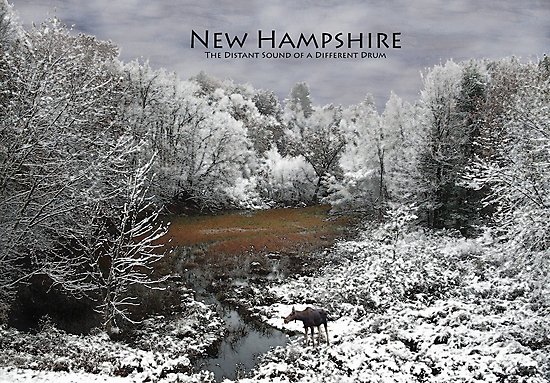
Snow River

A leader is best
When people barely know
That he exists,

Less good when
They obey and acclaim him,
Worse when
They fear and despise him.

Fail to honor people
And they fail to honor you.

But of a good leader,
When his work is done,
His aim fulfilled,
they will all say,
'We did this ourselves.’

Lao-Tzu
Chinese philosopher
Wayne D. King

Friday, April 13, 2018

Adopt an Image and Raise Money for Your Non Profit or Small Business


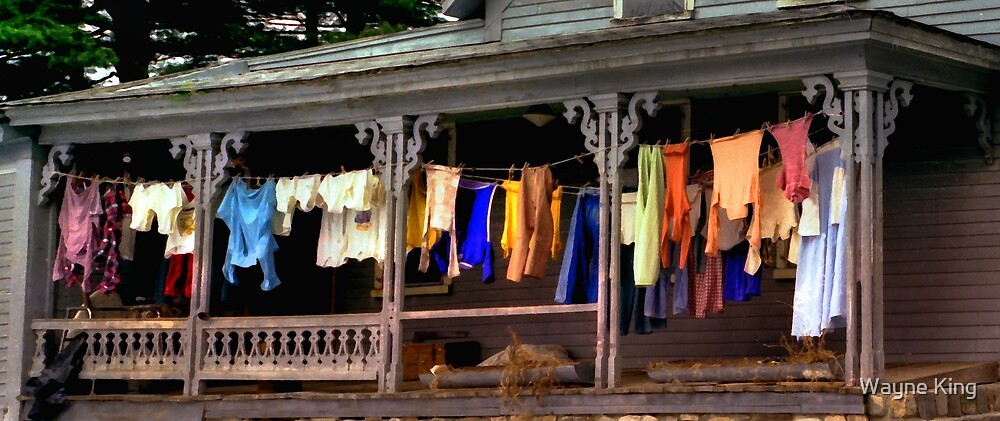
Alton Washday Expressions

Alton Washday Expressions

Produced by special request in an affordable limited edition of 100 signed and numbered originals for the good folks at the Rumney Village Store - that would be George & Sheila - a beautiful 8" x 20" signed image with a certificate of authenticity. You can purchase this original art for just $95.00 at the Rumney Village Store on Main Street in Rumney, New Hampshire. If it's too far to travel and you'd still like an original signed print, you can order it right here and we'll see to it that the Rumney Village Store gets credited - but you can save the cost of shipping by stopping by RVS and buying it directly and maybe purchasing one of their great deli offerings! or grab a copy of Sacred Trust 😉 . http://bit.ly/AltonEXP

As a way to support local businesses and nonprofits I have created this Adopt-an-Image program. If you or your nonprofit have an interest in adopting your favorite image its easy, just click here: http://bit.ly/AdoptImage 

Monday, March 19, 2018

Finding the Center - Reversing the Hollowing of the Political Center in America

This Week's View from Rattlesnake Ridge

"A serious and substantive discussion about lowering the voting age to 16 instead of 18 is also in order. Ten other countries now permit it. In Scotland the Parliament passed the franchise to vote for 16 and 17 year-olds unanimously after successfully testing the premise during their referendum on independence."

http://indepthnh.org/2018/03/18/finding-the-center-reversing-the-hollowing-of-the-political-center-in-america/


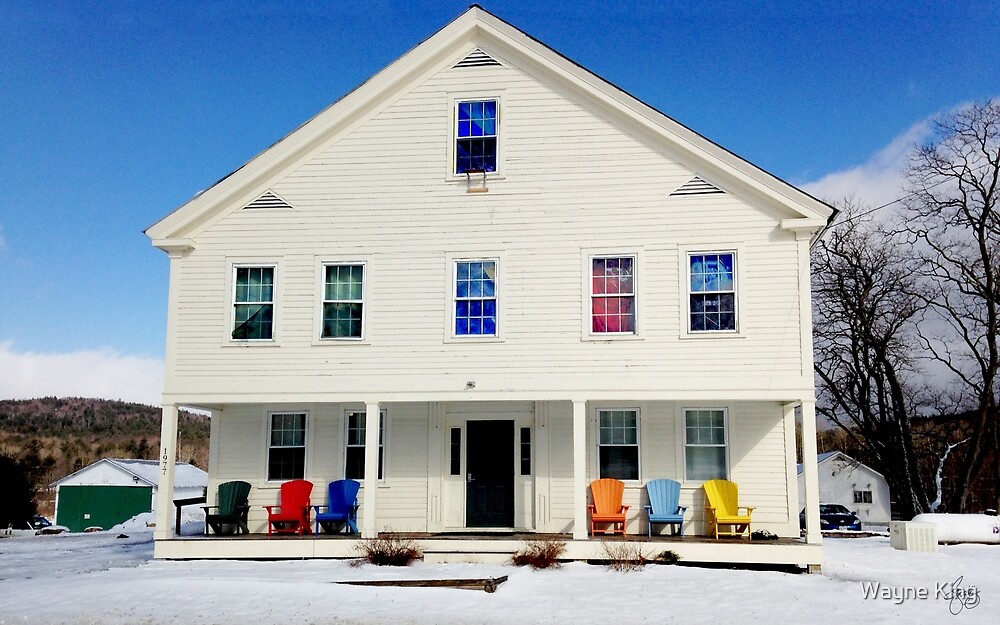
Colors of a Pike NH Home

Sunday, March 4, 2018

A National American Social Dividend and a New American Paradigm

This week’s View from Rattlesnake Ridge Column at InDepthNH
Believe it or not, 1973 was the last year that wages for the Middle Class and the Precariat rose in response to increasing productivity. Since that time wages for both have stagnated while the real income of the top 1% has risen dramatically.
This growing income gap is the greatest threat to our democracy and our most important challenge as a Republic. Furthermore it is a virtual iceberg of sadness, rage and division within our society. Where most of the danger lies beneath the surface of the water. One need only observe that the margin of Hillary Clinton’s loss to Donald Trump in the 2016 elections can be found in the number of people who voted for Barack Obama in 2008 and 2012 – desperately seeking hope – and then having found that still no one seemed to be listening – they voted to burn the system down by switching to Donald Trump.
This collapse and the growing disparity of income in America represents a grave and existential  danger to our Republic. The stability of a democracy is built on the strength of its middle class and the belief that even those in the Precariat can aspire to moving up …  the belief that if you work hard and play by the rules that every American has the opportunity to succeed. When people begin to lose faith in this the Republic is in peril.
Equally as important, though rarely observed, this disparity represents a nearly complete denial of what has contributed to an American economy that is second to no other in humanity’s history. The Gross Domestic Product of our nation is a complex synthesis of recent success and hard won achievement built over more than 500 years of history.

Saturday, March 3, 2018

Income Inequality - America’s Greatest Single Challenge in the Age of Technology

Wayne D. King

I believe that income inequality is the greatest single threat to our nation. If we do not begin to talk seriously about how we address this - and not the simplistic pablum that both Republicans and Democrats have fed us for the last 50 years - then the Republic is in grave danger. We will pinball from one ideologue on the right to one on the left.

"The world is shifting beneath our feet. Consider this:
1. Since 1973 wages and income for the bottom 99% of Americans have been stagnant. That means that every year growth in the economy is transferred directly into the bank accounts of 1% of the population.
2. The marginal costs of products move ever lower in response to enhanced productivity but that productivity is purchased by an unstoppable wave of technology displacing workers.
3. 94% of the jobs added to our economy since 2008 have been agency conntract part time jobs most without benefits and within the next 20 years 40-60% of all jobs that exist today will be replaced by technology.
4. For the first time in 100 years average American lifespans have gone down over the past decade. Some of this can be attributed to the Opiate crisis but a large share is the due to the fact that even a health club membership is out of reach for many Americans and expensive prescriptions are out of the question to many.  
I ask the same question that I asked in my column of January 1, 2018 ("A Steady Hand and an Open Heart" http://bit.ly/ASteadyHand) Who will buy the products when technology has replaced the human hands that once made them? To whom will those products be delivered when the trucks delivering them are driverless or they are flown through the air by drones? Where will we employ the taxi drivers, the line workers, the coal miners?"

Every American has contributed to the success of our economy for 500 years. We must find a way to share in those fruits in order to unleash a new entrepreneurial vision and spirit and to shrink the need for a safety net because more people are sharing in our economic success.

Next column: A National American Social Dividend and a New American Paradigm

Friday, January 19, 2018

The Deep State From Rattlesnake Ridge


The Deep State from Rattlesnake Ridge

This week, between caring for Alice who came down with a stomach flu on New Year’s eve and bringing in enough firewood to keep the woodstove cranking as I watched the thermometer plunge from zero to minus 10, then minus 20 and then down to minus 30 degrees below zero, I managed to catch just a bit of news where I heard that President Trump had turned his attention to what he – and Steve Bannon – despite their recent fall out, refer to as the “Deep State”.

For those folks who don’t breath the rarified air of Washington DC., The “Deep State” is a term that has gathered some cache over the past few years as the whipping boy of both the far left and the far right – mostly those who never heard of a conspiracy to which they didn’t subscribe. They somehow have become convinced that there is a nefarious and shadowy group that acts to undermine elected representatives of the people. 

Based on this, I thought I’d take a shot at describing just what the “deep state” means here at 2,500 feet above sea level in the shadow of Rattlesnake Ridge in the White Mountains of New Hampshire.

At 32 degrees below zero when I click that special button on my key fob that starts my Jeep remotely, making it warm enough to keep Alice happy, I thank the “Deep State” at General Motors that makes sure that my Jeep works at this God awful temperature and that the “Deep State” at EPA, the US Department of Transportation and the NTSB make sure it doesn’t blow up or seize up on the road. . . no matter who the President is or who’s in charge at GM.

When I walk into my house, turn on the lights and turn up the heat. I thanks the “Deep State” at the NH Electric Cooperative and Franklin Delano Roosevelt for providing the rural electrification that made it possible for electricity to power lights and an oil furnace to keep us warm and dry even in below zero temperatures and the “Deep State” at Dead River Heating and Propane for their oil and for our friend “Deep State Dave” the driver who dares our steep driveway even when it is covered with snow.  

At the Grocery Store when we buy meat or fresh and frozen vegetables all winter long we thank the “Deep State” at FDA that regulates the safety of beef and pork and chicken and veggies as well as the Deep State at Market Basket or Hannaford’s that makes sure they arrive on a regular basis so that we are never without the sustenance to keep hearth and home together – no matter who is President of the USA or CEO of our grocery chain.

When I stop in at the Pharmacy to get a prescription I thank the “Deep State” at the FDA that makes sure my drugs are safe. “Dr. Mike” our pharmacist one of the cogs in the “Deep State” counts every pill twice and checks to make sure that my prescription doesn’t interact dangerously with other medicines I take.  “Deep State Zita” takes the time to ask about Alice and our son Zach and still makes sure I’m not overcharged.

When a police officer stops us for a broken tail light I thank God for the “Deep State” department of Justice, the local police and courts and the “Deep State” at the ACLU that create a nexus of counter-veiling forces to assure my rights, even when I’m wrong.

When I turn onto the highway to return home, especially in a snowstorm, I thank God for the “Deep State” at the Highway Department and the Department of Safety and State Police that assure passage and protect our safety on the roads.

During the last few months we’ve read of several thwarted terror attacks here and abroad. You can thank the “Deep State” at Homeland Security and the Department of Justice for that. 

The “Deep State”, to those of us who do not see gremlins behind every bush, is just another name for the hard working, patriotic folks who go to work every day and do their jobs, even when some blowhards and politicians denigrate them and their efforts. 

This week President Trump took credit for the fact that no American had died in a plane crash on US soil in 2017 - though an army of journalists working feverishly over the past 24 hours has been unable to uncover a single point of contact between the President and anyone from the FAA or airline industry. With the entire airline regulatory infrastructure still in the hands of Obama appointees he might want to thank President Obama, or just the “Deep State” at the FAA.


Sunday, December 10, 2017

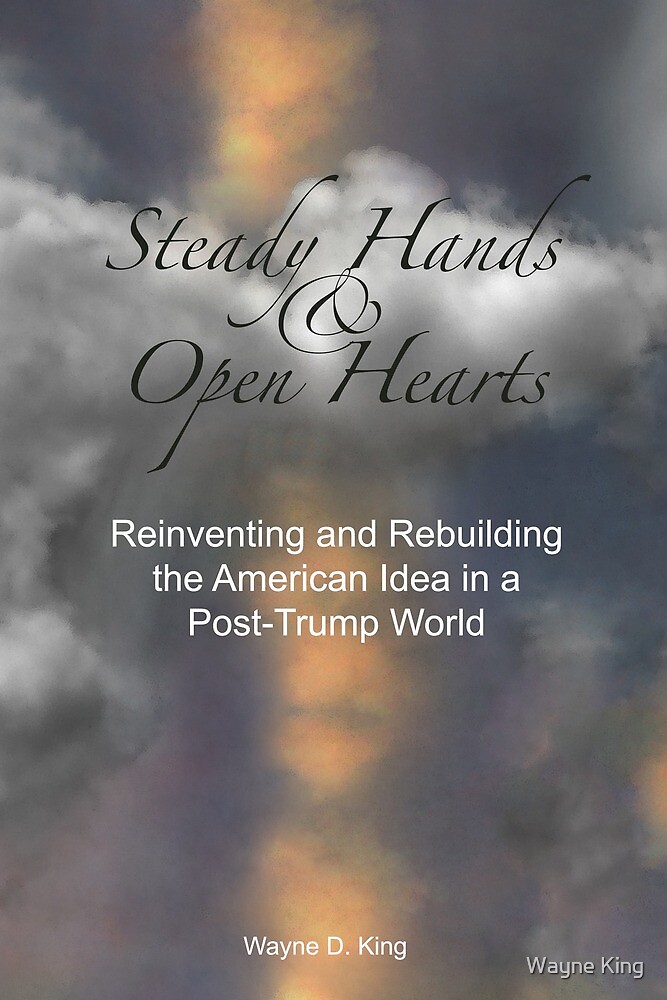
Steady Hand & Open Heart is headed for a book!

Steady Hands & Open Hearts is headed for a book!
I've had such positive feedback about my column - "A Steady Hand & An Open Heart" - at InDepthNH (http://bit.ly/SteadyHand). . . thank you!

As a result of the column a lot of folks have told me that they want to know more about my views on where we are as a nation and where we need to go to reinvigorate and perhaps even reinvent the American idea. They've encouraged me to write a book based on the foundation established in the column. So, I'm moving forward on doing just that. I

Here are some of the ways you can do engage with me in the process.

Join our email family. The best way to follow the process of writing this book and to have first shot at any special offers, is to join our email family. I'll send you an ocassional email just to let you know the process is going and to share some of my thoughts with you.

I give you my word that I will not flood your inbox with email, instead, I will send you brief updates including some excerpts from time to time, join the email list here:

http://eepurl.com/bbOh3n


SteadyHandsOpenHearts Facebook Page. If Facebook is the place where you go to keep up on your world, we've set up a page there. Follow us here:


Steady Hands & Open Hearts Blog. Hey, you're here now! A Blog is often the best way to provide information that lets readers dig a little deeper into the subject. Check it out and see if its true.

https://steadyhandsopenhearts.blogspot.com/

Holiday Gifts - Images and products

Holiday Gifts - Images and products created with my images available here: https://sites.google.com/site/mindscapeimages/ First Snow o...